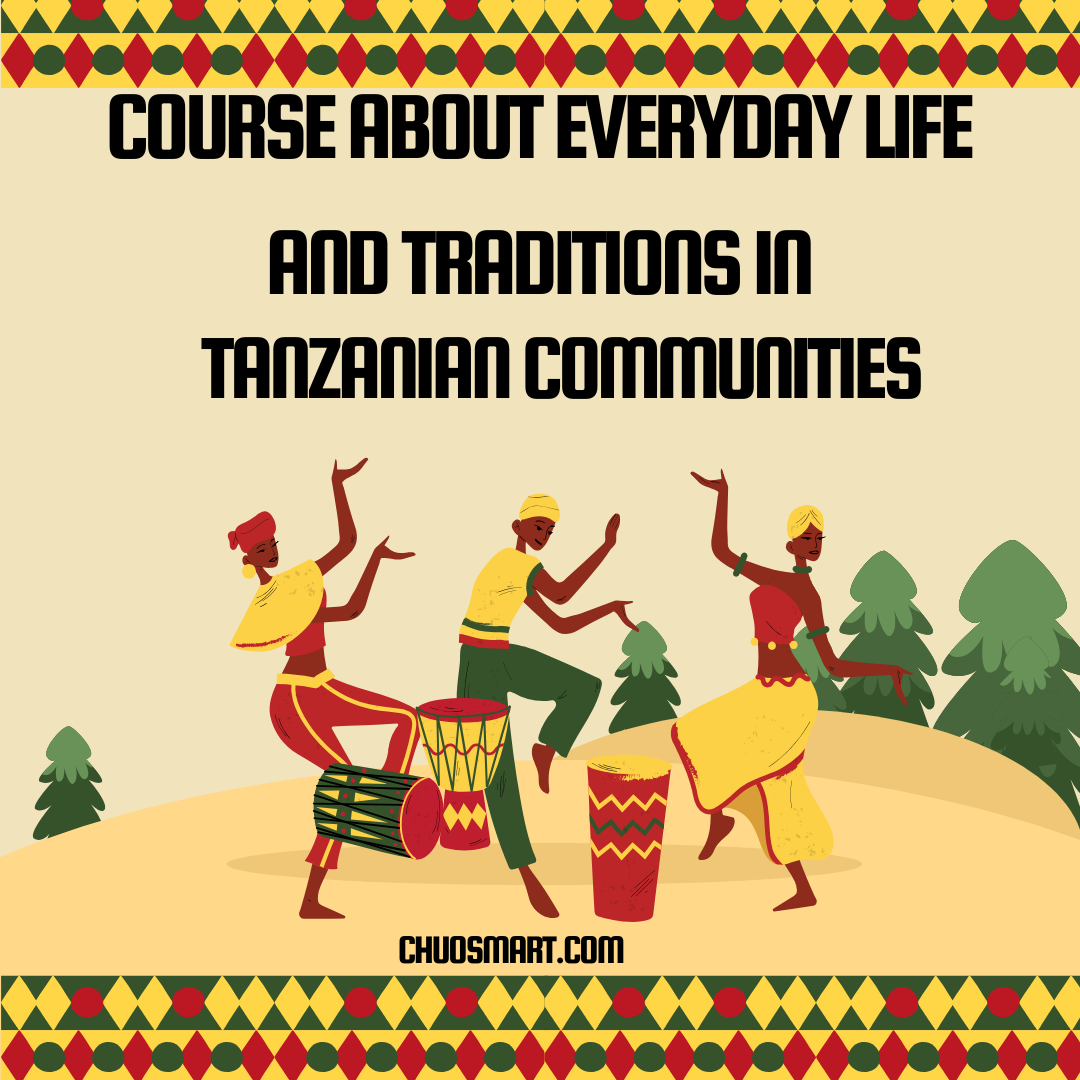
Everyday Life and Traditions in Tanzanian Communities
Course Description
This course explores the daily life, social values, and traditions of Tanzanian communities. Instead of focusing on tribes one by one, learners will understand how culture shapes family life, work, food, ceremonies, and social relationships across Tanzania.
Course Modules
Viewing Preview
You can view this course without enrolling. Your progress won't be saved unless you login and enroll.
Module 1: Family and Community Life
-
Extended family system
-
Roles of parents, children, and elders
-
Community support systems
-
Child upbringing and discipline
Activity:
Compare family life in Tanzania and your country.
Module 2: Food, Farming, and Livelihoods
-
Traditional farming methods
-
Fishing and pastoral life
-
Local markets and barter systems
-
Traditional food preparation
Activity:
Watch a traditional cooking video and summarize.
Module 3: Clothing, Identity, and Symbolism
-
Traditional clothing (kanga, kitenge, shuka)
-
Colors and patterns meanings
-
Jewelry and body decoration
-
Identity and status
Module 4: Music, Dance, and Storytelling
-
Role of music in celebrations
-
Traditional instruments
-
Dances for rituals and entertainment
-
Oral storytelling traditions
Activity:
Analyze a traditional song or dance.
Module 5: Beliefs, Spirituality, and Healing
-
Indigenous beliefs and ancestors
-
Traditional healers
-
Herbal medicine
-
Religion and cultural blending
Module 6: Social Rules and Etiquette
-
Greetings and respect
-
Hospitality culture
-
Gender roles and expectations
-
Conflict resolution
Activity:
Role-play cultural interaction scenarios.
Module 7: Cultural Change and Global Influence
-
Urbanization
-
Education and technology
-
Youth and cultural identity
-
Cultural preservation
No content available for this module yet.
Overview
In Tanzanian society, family and community are the foundation of social life. Unlike many Western societies that emphasize individualism, Tanzanian communities value collective responsibility, cooperation, and respect. This module explores how families are structured, how responsibilities are shared, and how children are raised within the community.
1. Extended Family System
In Tanzania, the family extends beyond parents and children. The extended family system includes grandparents, uncles, aunts, cousins, and sometimes even neighbors.
Key Features:
-
Family members live together or maintain strong connections
-
Children belong to the whole family, not just biological parents
-
Relatives support each other emotionally and financially
-
Elders play an advisory and leadership role
Cultural Value:
“A child belongs to the community.”
2. Roles of Parents, Children, and Elders
Parents:
-
Provide food, shelter, and education
-
Teach cultural values and discipline
-
Serve as role models
-
Fathers traditionally provide security; mothers manage household and childcare (roles may vary today)
Children:
-
Learn respect and obedience
-
Help with household chores
-
Care for younger siblings
-
Learn traditions through observation and participation
Elders:
-
Custodians of culture and tradition
-
Advisors and decision-makers
-
Resolve family and community conflicts
-
Teach history, values, and moral lessons
3. Community Support Systems
Tanzanian communities rely on collective support, especially during important life events.
Examples:
-
Neighbors help during weddings, funerals, and childbirth
-
Community farming or shared labor
-
Financial contributions during emergencies
-
Emotional support during crises
This system strengthens unity and reduces social isolation.
4. Child Upbringing and Discipline
Children are raised with strong moral guidance and communal responsibility.
Common Practices:
-
Respect for elders is emphasized from an early age
-
Discipline is often corrective, not punitive
-
Storytelling, proverbs, and examples are used to teach behavior
-
Community members may guide or correct a child respectfully
Goal:
To raise responsible, respectful, and community-oriented adults.
No content available for this module yet.
Overview
Food and livelihoods are central to daily life in Tanzanian communities. Most families depend on agriculture, fishing, or livestock keeping for survival and income. These activities are deeply connected to culture, environment, and traditional knowledge passed down through generations.
1. Traditional Farming Methods
Traditional farming in Tanzania is largely subsistence-based, meaning families grow food mainly for their own consumption.
Common Practices:
-
Use of simple tools such as hoes and machetes
-
Rain-fed agriculture
-
Intercropping (growing multiple crops together)
-
Crop rotation to maintain soil fertility
-
Use of organic manure
Main Crops:
-
Maize
-
Cassava
-
Bananas
-
Beans
-
Rice
Traditional farming promotes sustainability and community cooperation.
2. Fishing and Pastoral Life
Fishing Communities:
Fishing is common near Lake Victoria, Lake Tanganyika, Lake Nyasa, and the Indian Ocean.
-
Fishing provides food and income
-
Traditional boats and nets are widely used
-
Fishing activities often involve entire families
-
Fish preservation through drying and smoking
Pastoral Life:
Pastoral communities such as the Maasai depend on livestock.
-
Cattle, goats, and sheep are sources of wealth
-
Livestock provide milk, meat, and social status
-
Seasonal movement in search of pasture and water
-
Strong cultural attachment to animals
3. Local Markets and Barter Systems
Local markets are important social and economic centers.
Market Features:
-
Sale of farm produce, livestock, and handmade goods
-
Weekly or daily markets
-
Face-to-face trade and negotiation
-
Strong social interaction
Barter System:
In some rural areas:
-
Goods are exchanged without money
-
Food is traded for labor or other goods
-
Strengthens trust and relationships
4. Traditional Food Preparation
Food preparation is often a communal activity, especially during ceremonies.
Common Foods:
-
Ugali (maize flour porridge)
-
Rice and beans
-
Banana-based meals
-
Fish and meat dishes
Cooking Methods:
-
Open fire cooking
-
Clay pots and traditional stoves
-
Use of local spices and herbs
Food is shared as a sign of hospitality and unity.
No content available for this module yet.
Overview
In Tanzanian cultures, clothing is more than a way to cover the body. It is a powerful form of identity, communication, and cultural expression. Through clothing, colors, patterns, and body decoration, people express social status, beliefs, and community belonging.
1. Traditional Clothing
Kanga
-
Worn mainly by women
-
Brightly colored fabric with Swahili proverbs
-
Used for daily wear, ceremonies, and carrying babies
-
Communicates messages, emotions, or social opinions
Kitenge
-
Thicker fabric with bold patterns
-
Worn by both men and women
-
Popular for celebrations, weddings, and formal events
-
Symbol of African pride and fashion
Shuka
-
Common among the Maasai
-
Usually red or blue
-
Represents strength, bravery, and protection
-
Suitable for pastoral life and outdoor conditions
2. Meanings of Colors and Patterns
Colors and patterns carry deep symbolic meanings.
Common Color Meanings:
-
Red: bravery, strength, protection
-
Blue: peace, sky, and water
-
White: purity and spirituality
-
Black: maturity and unity
-
Green: land, fertility, and life
Patterns:
-
Geometric shapes represent harmony and order
-
Repeated patterns show continuity and tradition
-
Designs may indicate ethnic identity or life stage
3. Jewelry and Body Decoration
Jewelry and body decoration are used for beauty, identity, and social meaning.
Jewelry:
-
Beaded necklaces, bracelets, and earrings
-
Materials: beads, shells, metal, bone
-
Common among Maasai and other tribes
-
Colors and designs show age, marital status, or rank
Body Decoration:
-
Body painting with natural pigments
-
Scarification and traditional markings (in some communities)
-
Hairstyles as cultural identity symbols
4. Identity and Status
Clothing and decoration reflect a person’s position in society.
Examples:
-
Elders wear specific styles showing wisdom and authority
-
Married individuals wear distinct jewelry or clothing
-
Warriors or initiates have recognizable symbols
-
Ceremonial clothing differs from daily wear
Traditional attire strengthens a sense of belonging and pride.
No content available for this module yet.
Overview
Music, dance, and storytelling are essential parts of Tanzanian cultural life. They are not only forms of entertainment but also important tools for education, communication, spiritual expression, and social unity. Through these traditions, communities preserve history, values, and identity.
1. Role of Music in Celebrations
Music plays a central role in almost every important event.
Common Occasions:
-
Weddings
-
Birth and naming ceremonies
-
Initiation rites
-
Harvest celebrations
-
Religious and spiritual rituals
Functions of Music:
-
Express joy, gratitude, or sorrow
-
Unite community members
-
Pass cultural values and history
-
Mark important life stages
Music often involves singing, clapping, and call-and-response patterns that encourage participation.
2. Traditional Instruments
Traditional Tanzanian music uses instruments made from natural and locally available materials.
Common Instruments:
-
Drums (Ngoma): Used for rhythm and communication
-
Xylophones (Marimba): Produce melodic sounds
-
Flutes: Used in spiritual and ceremonial music
-
String instruments: Used in storytelling and praise songs
Each instrument has cultural meaning and is often linked to specific ceremonies or regions.
3. Dances for Rituals and Entertainment
Dance is a powerful form of expression and storytelling.
Ritual Dances:
-
Performed during initiation and healing ceremonies
-
Often led by elders or spiritual leaders
-
Movements carry symbolic meanings
Entertainment Dances:
-
Performed during festivals and social gatherings
-
Energetic and expressive
-
Encourage community participation
Different tribes have unique dance styles, rhythms, and costumes.
4. Oral Storytelling Traditions
Before written records, history and knowledge were preserved through oral storytelling.
Storytelling Features:
-
Stories about ancestors, heroes, and animals
-
Moral lessons and life guidance
-
Use of proverbs, songs, and repetition
-
Storytellers were respected community members
Storytelling helps teach values such as honesty, courage, and cooperation.
No content available for this module yet.
Overview
Beliefs and spirituality play a central role in Tanzanian traditional societies. They shape how people understand life, health, nature, and the unseen world. This module explores indigenous belief systems, ancestral reverence, traditional healing practices, and the blending of religion with culture.
1. Indigenous Beliefs and Ancestors
Many Tanzanian communities believe in a supreme creator who governs the universe, alongside the presence of ancestral spirits.
Key Beliefs:
-
Ancestors act as protectors and guides
-
Respect for ancestors maintains harmony
-
Rituals and offerings are made to honor them
-
Nature (mountains, rivers, forests) is sacred
Ancestors are believed to influence health, fertility, and community well-being.
2. Traditional Healers
Traditional healers are respected figures who serve as spiritual guides and medical practitioners.
Roles of Healers:
-
Diagnose physical and spiritual illnesses
-
Perform cleansing and healing rituals
-
Advise families and communities
-
Communicate with ancestral spirits
Knowledge is passed down through generations, often through apprenticeship.
3. Herbal Medicine
Herbal medicine is widely used in Tanzanian traditional healing.
Characteristics:
-
Made from roots, leaves, bark, and herbs
-
Used to treat common illnesses
-
Based on deep knowledge of local plants
-
Combined with spiritual practices in some cases
Herbal medicine emphasizes balance between body, mind, and spirit.
4. Religion and Cultural Blending
Modern Tanzania practices religious coexistence, mainly Christianity, Islam, and indigenous beliefs.
Cultural Blending Examples:
-
Traditional rituals alongside church or mosque ceremonies
-
Indigenous music and dress in religious events
-
Respect for ancestors combined with formal religion
This blending reflects adaptability and cultural continuity.
Discussion Questions
-
How do indigenous beliefs influence daily life and health?
-
Why is cultural blending common in Tanzanian spirituality?
Activity
Reflection Task:
Write a short reflection on how spirituality influences health practices in different cultures.
Key Vocabulary
-
Spirituality
-
Ancestors
-
Traditional healer
-
Herbal medicine
-
Cultural blending
No content available for this module yet.
Overview
Social rules and etiquette guide how people interact in Tanzanian communities. Respect, hospitality, and harmony are highly valued. Understanding these social norms helps visitors and learners interact appropriately and build positive relationships.
1. Greetings and Respect
Greetings are very important in Tanzanian culture and are often extended and polite.
Key Practices:
-
Greeting elders first as a sign of respect
-
Asking about health and family before starting conversations
-
Using respectful body language (standing, bowing slightly, or using the right hand)
-
Avoiding direct confrontation with elders
Greetings help strengthen social bonds and show good manners.
2. Hospitality Culture
Hospitality is a strong cultural value in Tanzania.
Common Expressions of Hospitality:
-
Welcoming guests warmly
-
Offering food or drinks to visitors
-
Sharing meals, even with limited resources
-
Treating guests with respect and generosity
A guest is considered a blessing and should feel comfortable and respected.
3. Gender Roles and Expectations
Traditional Tanzanian societies have defined gender roles, though these are changing with modernization.
Traditional Roles:
-
Men often handle leadership and external affairs
-
Women traditionally manage the home and childcare
-
Responsibilities are learned through observation and guidance
Modern Changes:
-
Increased education for both genders
-
Women participating in leadership and economic activities
-
Evolving family roles
4. Conflict Resolution
Conflict resolution emphasizes peace, dialogue, and community harmony.
Traditional Methods:
-
Elders mediate disputes
-
Open discussion and reconciliation
-
Emphasis on restoring relationships
-
Avoidance of public confrontation
The goal is unity, not punishment.
Discussion Questions
-
Why are greetings important in Tanzanian culture?
-
How does community-based conflict resolution differ from formal legal systems?
No content available for this module yet.
Overview
Tanzanian culture is dynamic and continually evolving. Urbanization, education, technology, and global connections are reshaping traditional lifestyles. This module examines how these forces influence cultural identity, especially among youth, and how communities work to preserve their heritage.
1. Urbanization
Urbanization has led many people to move from rural areas to cities in search of education and employment.
Key Impacts:
-
Shift from communal to more individual lifestyles
-
Reduced dependence on traditional livelihoods
-
Exposure to diverse cultures and ideas
-
Changes in family structures and social interactions
While cities offer opportunities, they can weaken traditional community ties.
2. Education and Technology
Education and technology play a major role in cultural transformation.
Education:
-
Promotes literacy and global awareness
-
Encourages critical thinking and new perspectives
-
Sometimes reduces reliance on traditional knowledge
Technology:
-
Social media connects youth globally
-
Mobile phones and the internet spread new trends
-
Digital platforms preserve and share culture
Technology can both challenge and support cultural traditions.
3. Youth and Cultural Identity
Young people often balance tradition with modern influences.
Common Challenges:
-
Pressure to adopt global lifestyles
-
Language shift from indigenous languages to global ones
-
Changing fashion, music, and values
Positive Trends:
-
Youth promoting culture through music, fashion, and media
-
Revival of traditional art in modern forms
-
Cultural pride and innovation
Youth play a key role in shaping the future of culture.
4. Cultural Preservation
Communities actively work to protect and sustain cultural heritage.
Preservation Methods:
-
Teaching culture in schools and homes
-
Cultural festivals and museums
-
Documentation through writing, video, and digital media
-
Community elders passing knowledge to younger generations
Preserving culture ensures continuity and identity.
No content available for this module yet.
Quizzes & Assessments
No assessments have been created for this course yet.
Instructors
-
Captain
+255659256606
Course Information
- Course Type General Course
 ChuoSmart Notifications